
It has been over 42 days since I last wrote a journal entry. I am currently in Cappadoccia's Goreme town, a very commercialized place for tourists to explore the Byzantine cave dwellings carved in the soft sandstone by clandestine Christians.

Lets recap the last 42 days. Landing safely in Istanbul was a total surprise. I had not imagined that I would be in Turkey until 2002 and thus had not done any research or asked a single person about the city. I knew it had history, Haya Sofia Cathedral/Mosque, and Hammam baths still functioning. In my mind was snippets I had heard about Athens, Greece being chaotic, smoggy and unattractive... for some reason I assumed Turkey's Istanbul would be the same.

At the airport I caught a bus to Aksaray in the city. As we hummed along the smooth highways and clean turns with glimpses of the sea of Marmara flashing on the right among the skyline of cranes and port equipment I turned to the Pakistani man sitting next to me and exclaimed "Turkey is a really modern and wealthy country!" I interrupted him telling me about how the WTC attack was a Zionist plot mounted by the CIA in order to justify increasing the number of US military installations in./around the Middle East.

I told him that what he was telling me was the exact same thing that everyone in Pakistan had been saying and that he was just spewing out the program his country's media had fed him with out independent thought or significant direct experience. This is true of almost everyone on the planet I have seen so far actually. Whether western European, American, or Mainland Chinese, few have any direct experience with the building blocks of current events and most just spew out the "party line" of their ethnic group or national media.

We are all members of our team, hope that the team knows best how to protect our interests and understand things that we don't have the time or access to understand directly ourselves. I am not qualified to do this justice, anyone interested in this sort of thing should see Chomsky's "Manufacturing Consent" or more recent works.

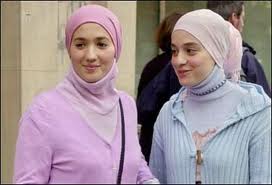
Landing in Istanbul's Aksaray area at morning rush hour was a plunge into sheik European style and fashion. The sight of so many women in miniskirts and tight clothes also hit my brain like a tidal wave. How could there be so much affluence in Turkey? Every public and private fixture showed money, the streets were clean, the people indifferent to my grungy backpackerness shot into their stratosphere after 10 months in the Indian Subcontinent.

People here walk straight ahead while looking to the side, they multi-task and show irritation with one another easily, they appear so distracted. I feel my own thoughts becoming less clear, more erratic like a flickering TV screen.

The next three weeks in Istanbul are spent discovering that people here appreciate nostalgia, like to talk on a cell phone while puffing on the Nargile and drinking tea in an old Moslem cemetery, the headstones adorned with stylized turbans from the Ottoman era. The city of Istanbul's topography is the whole nation of Turkey in microcosm. The names of each area from a different city in Anatolia, and the people a mosaic laid over that reflecting the urban migration of 15-25 million Turks seeking more of something.

Granada, Spain in reverse, Istanbul was the last bastion of Eastern Christianity in a rising sea of Ottoman Turk and Moslem control of the area until the 1490s when it succumbed to the inevitable and let the siege of the city end with the Ottoman Sultan Fateh sprinkling dirt on his head as a sign of humility and striding into the Haya Sophia to declare it a Mosque and Istanbul itself the jewel of a united Ottoman empire stretching from the edge of Western Europe to central Asia and north Africa.

The style of the Mosques (some former Churches) in Istanbul is unlike any architecture in the world - each building a confident mix of bulbous and sharp elements pointing to another universe.

My main occupation was exploring and eating. There is nothing like exposing the senses to the rich confusion of Turkish language and history to work up one's appetite for lightly sweet baklava and sobiyet, cheap fried fish sandwiches off the boats moored at Eminonu, spicy Adana kebaps on rice pilaf, Choban Shepard's Salad like good salsa missing cilantro, and Donor kebab. I had heard before of Donor Kebab and have of course seen the similarly cooked Greek Gyro my whole life but having the real thing done well was a whole new world. Layers of lamb on a huge vertical skewer rotating against heating panels on one side, good Donor Kebab's definition depends on your taste and tolerance for grease.

I have seen every level of leanness available but my favorite is the donorist Donor - the one with a big slab of crispy fat at the top layer oozing the invigorating juices down the sides of the kebab as it spins, the musky lamb's flesh punctuated by intercalary layers of white fat. From a man whose family members frequently fight over the dangling earlobe of fat on the end of a good olive oil and rosemary marinated scorched lamb chop a la my mother the juicy doner in full glory is like an epiphany.

The whole time in Istambul I slept outside in the garden of Konya Pansion, the cheapest place to stay in Sultanahmet with kitchen facilities and all the Japanese backpackers one could ever want. I think at its peak this pension had fully double the number any reasonable hotelier would want to cram into such a small building, Japanese men sleeping in hallway on half meter by one meter cushions, Japanese girls under the stairs in the storage area, five people out the garden among the tools and storage area.

The character and conscientiousness of the Japanese backpackers made this crowding not only tolerable but pleasant. Two people there that spoke fluent English were a Japanese architect living in NY and trying to get all the visas for central Asia (including the elusive Turkmenistan transit visa) named Kenichiro and one nervous Mallorcan flamenco guitarist Miguel.





.jpg)


